
Search is evolving fast. Google now prioritizes experience, intent alignment, structured clarity, and content that genuinely helps users complete a task. As a result, websites that rely on outdated keyword stuffing or thin pages are steadily losing visibility. Instead, pages that demonstrate expertise, satisfy intent, and load quickly across devices are rising.
This On-Page SEO Checklist is built around current ranking signals, including helpful content systems, page experience standards, structured data, and entity-based search. At Division Web Design, we apply these principles across client projects to ensure pages not only rank but also convert.
Why On-Page SEO Matters More in 2026
Although backlinks still play a role, Google increasingly evaluates what happens directly on your page. In other words, search engines measure how clearly your content answers a query, how easy it is to navigate, and whether users engage with it.
Moreover, with AI-generated content flooding the web, originality and clarity now carry more weight. Therefore, structured formatting, semantic depth, and intent satisfaction are no longer optional—they are foundational.
1. Search Intent Comes First
Before writing a single word, identify what the user truly wants. For instance, are they seeking information, comparing services, or ready to purchase?
If your page targets informational queries, provide clear explanations. On the other hand, if the keyword signals commercial intent, include service details, proof, and trust signals. When intent matches content, bounce rates decrease and engagement improves.
2. Strategic Keyword Placement
Keywords still matter. However, placement and context matter more than repetition.
Use your primary keyword naturally in:
- Title tag
- Meta description
- H1 heading
- First 100 words
- At least one subheading
- Image alt text
- URL slug
This On-Page SEO Checklist recommends maintaining semantic relevance instead of forced repetition. Additionally, include related phrases and entities to strengthen topical signals.
3. Optimized Title Tags and Meta Descriptions
Title tags should remain under 60 characters and include the target keyword naturally. Meanwhile, meta descriptions should encourage clicks while accurately summarizing the page.
Although meta descriptions are not direct ranking factors, they significantly influence click-through rates. Consequently, higher CTR can improve performance over time.
4. Content Depth and Structure
Google now favors pages that thoroughly cover a topic rather than surface-level summaries. Therefore, structure your content logically with H2 and H3 subheadings.
Each section should answer a specific question. Additionally, include examples, explanations, and context to strengthen clarity. Avoid filler text. Instead, focus on usefulness and real-world application.
This is why a detailed On-Page SEO Checklist remains essential for modern websites.
5. Internal Linking Strategy
6. URL Structure and Clean Architecture
Short, descriptive URLs perform better. Avoid random numbers or unnecessary parameters.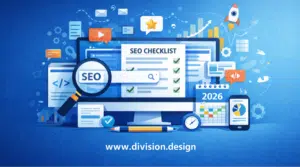
Instead of:
example.com/page?id=123
Use:
example.com/on-page-seo-checklist
Clear URLs improve crawlability and user trust.
7. Core Web Vitals and Page Experience
Speed, responsiveness, and visual stability directly impact rankings. Google measures these through Core Web Vitals metrics.
To improve performance:
- Compress images
- Use next-gen formats
- Minify CSS and JavaScript
- Implement lazy loading
- Improve server response time
Because user patience is limited, faster sites retain more visitors.
8. Mobile-First Optimization
Since Google indexes mobile versions first, responsive design is mandatory. Buttons should be easy to tap, fonts readable, and layouts stable.
Furthermore, avoid intrusive pop-ups that block content. Clean design improves usability and engagement.
9. E-E-A-T Signals (Experience, Expertise, Authority, Trust)
Google evaluates credibility signals carefully. Therefore, include:
- Author bios with relevant expertise
- Updated content dates
- Clear contact and business information
- Privacy policy and terms pages
- Real testimonials or case studies
Trust elements strengthen rankings, especially in competitive industries.
10. Schema Markup and Structured Data
Structured data helps search engines understand context. For example, FAQ schema can increase visibility through rich results.
Additionally, Local Business schema improves geographic relevance. When implemented correctly, schema enhances search appearance and click rates.
11. Image Optimization
Images should support the content rather than distract from it. Use descriptive alt text that explains the image contextually.
Moreover, compress large files to reduce load time. Since visual search is growing, properly optimized images can drive additional traffic.
12. Content Freshness and Updates
Google favors updated content when accuracy matters. Therefore, review older pages regularly.
Add new insights, refresh statistics, and adjust formatting where necessary. Updating a strong page often delivers better results than publishing thin new posts.
13. Engagement Metrics and Behavioral Signals
User interaction influences visibility. Pages that keep visitors reading, scrolling, or clicking internally send positive signals.
To improve engagement:
- Use short paragraphs
- Add subheadings frequently
- Include relevant examples
- Improve readability
As a result, dwell time increases and bounce rates decline.
14. Avoid Over-Optimization
Although optimization matters, excessive keyword repetition can hurt rankings. Write naturally for users first.
This On-Page SEO Checklist emphasizes clarity over manipulation. In fact, Google’s systems are designed to detect artificial patterns.
15. Topical Authority and Content Clusters
Instead of publishing isolated posts, build topic clusters. Create a pillar page supported by related articles.
For example, a main service page can link to supporting guides, FAQs, and case studies. Consequently, your website gains authority in that niche.
16. Clear Calls to Action
Every page should guide users toward a logical next step. Whether booking a consultation or requesting details, clarity improves conversions.
If you want expert support implementing this On-Page SEO Checklist, Division Web Design builds structured, search-focused websites aligned with current Google standards. A properly optimized page not only ranks but also generates measurable business growth.
Ready to strengthen your on-page strategy? Connect with our team today and take the next step toward better search visibility.
Final Thoughts
Search engines are smarter than ever. They evaluate context, credibility, and user behavior—not just keywords. Therefore, applying a modern On-Page SEO Checklist ensures your website remains competitive in 2026 and beyond.
When strategy, structure, speed, and user value work together, rankings improve naturally. Most importantly, helpful content wins.
Division Web Design continues to implement advanced on-page strategies that align with Google’s latest systems. If your website needs refinement, this is the right time to act quietly and strategically.
