
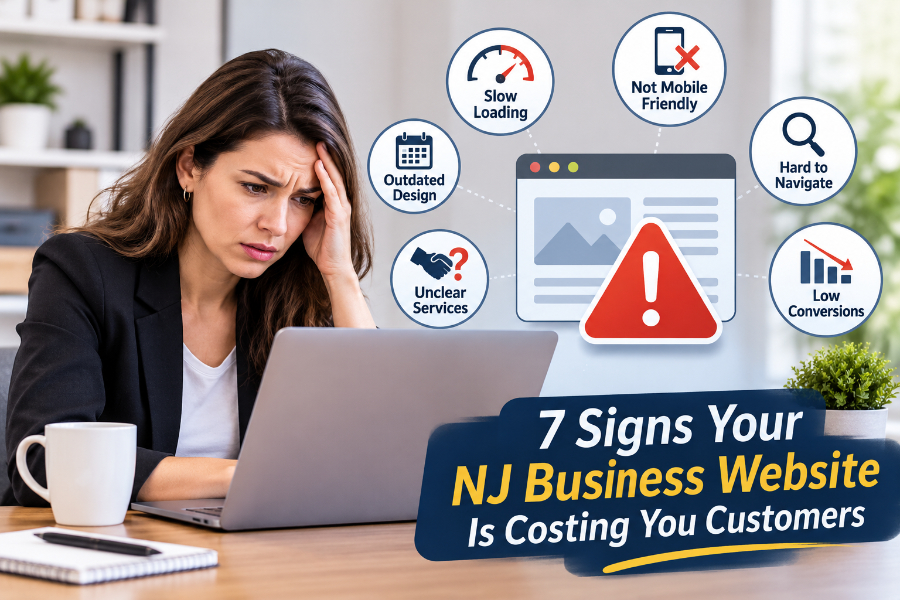
Your website often creates the first impression of your business. When visitors land on an outdated or confusing NJ business website, they may leave before learning what you offer. Slow pages, unclear information, weak calls to action, and poor mobile experiences can quietly reduce your leads. Division Web Design helps businesses create professional websites that make it easier for visitors to understand their services, trust their brand, and take the next step.
If your website no longer supports your business goals, watch for these seven warning signs.
1. Your Website Looks Outdated
Design trends change quickly. Therefore, an old-looking website can make visitors question whether your business still operates actively.
Outdated colors, cluttered layouts, small text, dated images, and inconsistent pages can weaken your credibility. Even if you provide excellent services, your website should reflect the same level of professionalism.
A modern layout should guide visitors naturally from one section to another. It should also make your key information easy to find.
Division Web Design creates clean and professional websites that help businesses present their services clearly while giving visitors a stronger first impression.
2. Visitors Struggle to Find Important Information
People usually visit a business website with a specific goal. They may want to learn about your services, check your location, request a quote, or contact your team.
If visitors need to search through several pages to find basic information, they may simply leave.
Your navigation should remain simple and predictable. Use clear menu labels, organized service pages, visible contact information, and logical page structures. In addition, place important information where visitors can find it without unnecessary clicks.
A strong website removes friction instead of creating more questions.
3. Your Website Works Poorly on Mobile Devices
Many potential customers browse websites from smartphones. Consequently, a website that looks good only on a desktop can lose valuable opportunities.
Check your website on different screen sizes. Look for tiny text, buttons that remain difficult to tap, images that extend beyond the screen, and menus that feel difficult to use.
Your pages should adjust smoothly across phones, tablets, and computers. Visitors should also access your contact information and important service details without constantly zooming or scrolling sideways.
A responsive Web Design approach can improve usability and help visitors stay engaged across devices.
4. Your Pages Load Too Slowly
Website speed affects the user experience. When pages take too long to load, visitors may abandon them before they even see your main message.
Large images, unnecessary website elements, outdated plugins, excessive scripts, and poor hosting can contribute to slow performance.
Start by reviewing your most important pages. Compress large images, remove unnecessary elements, improve technical performance, and keep your page structure efficient.
Moreover, pay attention to how your website performs on mobile connections. A page that loads quickly on a fast office connection may perform very differently for someone browsing from a smartphone.
5. Your Website Does Not Clearly Explain Your Services
A visitor should understand what you do within seconds of reaching your website.
If your homepage uses vague statements without explaining your actual services, visitors may struggle to determine whether your company can help them.
Create clear service sections and use straightforward language. Explain what each service does, who needs it, and what customers can expect.
You should also give every major service its own dedicated page when appropriate. This structure helps visitors find relevant information while giving search engines clearer signals about your offerings.
6. Your Website Does Not Attract the Right Local Visitors
A professional website needs more than an attractive appearance. It also needs to reach people who actively search for your services.
For example, a New Jersey business may serve customers in specific cities, counties, or surrounding communities. If the website provides little local information, it may miss opportunities to appear for relevant searches.
Search Engine Optimization can help your website communicate its services, locations, and expertise more effectively. Strong page titles, useful content, relevant headings, internal links, and location-focused information can all support better organic visibility.
However, avoid stuffing keywords into every paragraph. Instead, create useful pages that answer real customer questions and naturally explain what your business provides.
7. Your Website Does Not Give Visitors a Clear Next Step
Even when visitors like your website, they may not contact you if you never tell them what to do next.
Every important page should guide visitors toward a relevant action. Depending on your business, that action could include requesting a quote, calling your team, booking an appointment, completing a contact form, or learning about a specific service.
Use clear calls to action throughout the customer journey. Keep them visible without making the page feel overly promotional.
For example, a service page can explain the problem, present the solution, answer common questions, and then invite the visitor to contact your team.
How a Better Website Can Help Your Business
Your website should work as more than an online brochure. It should support your marketing, communicate your value, answer customer questions, and make it easier for prospects to contact you.
Therefore, review your website regularly and look at it from a customer’s perspective. Ask yourself whether visitors can quickly understand what you offer, find the information they need, use the site comfortably on mobile devices, and take the next step.
If several warning signs apply to your website, a redesign may help you create a stronger online experience.
Build a Website That Works for Your Business
A poorly performing website can quietly send potential customers toward competitors. On the other hand, a clear, responsive, user-friendly website can give visitors more confidence and make the customer journey easier.
Division Web Design helps businesses improve their online presence through strategic website solutions designed around usability, business goals, and customer needs. If your current website feels outdated, difficult to use, or unable to generate the results you expect, now is a good time to review it.
Ready to improve your website? Contact us at 732-850-5636 to discuss your website needs and create a stronger online experience for your business.
Frequently Asked Questions
How often should a business redesign its website?
Most businesses should review their website regularly and consider a redesign when the site looks outdated, performs poorly, lacks mobile usability, or no longer supports current business goals.
What makes a business website effective?
An effective website combines clear navigation, responsive design, useful content, fast performance, strong calls to action, and an easy experience across different devices.
Can a website redesign improve customer conversions?
Yes. A clearer layout, stronger messaging, easier navigation, faster pages, and more visible calls to action can make it easier for visitors to become leads or customers.
Should a local business optimize its website for New Jersey searches?
Yes. Businesses that serve New Jersey customers can benefit from location-focused website content, relevant service pages, strong local signals, and useful information that matches local search intent.
