
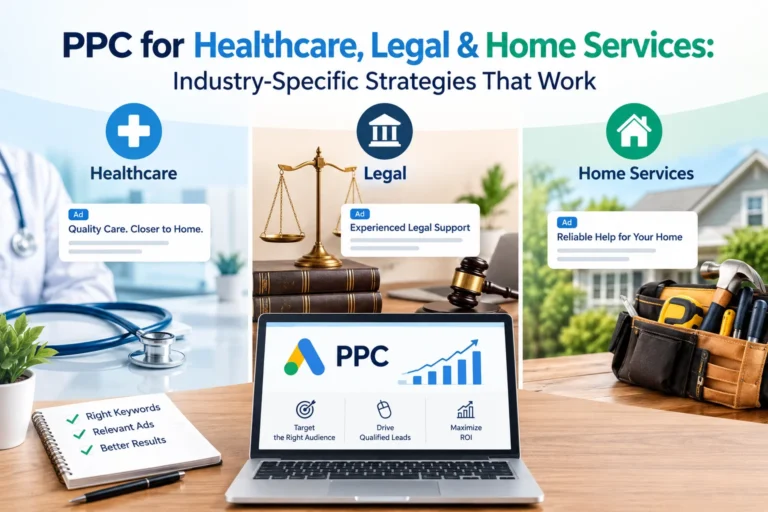
Paid advertising in specialized fields like healthcare, legal services, and home improvement requires more than basic campaign setup. Each industry comes with its own set of rules, customer behaviors, and competitive pressures that demand specialized PPC Management Services to see real returns without compliance issues or wasted ad spend.
Why One-Size-Fits-All PPC Doesn’t Work
Many businesses think paid search works the same everywhere. Pick keywords, write ads, set budgets, and wait for results. This mindset fails quickly in regulated industries where mistakes cost more than just money.
Healthcare providers must navigate patient privacy laws that restrict data collection and audience targeting. Law firms bid on some of Google’s most expensive keywords where poor qualification means burning thousands weekly. Home service companies face local competition and seasonal demand that standard bidding cannot address.
Recent Google updates through 2025-2026 made generic approaches even riskier. The search giant now evaluates entire domains for content quality, not individual pages. Cookie-cutter landing pages, generic stock photos, and vague messaging trigger lower rankings across both paid and organic results.
Healthcare PPC: Building Campaigns Around Patient Privacy
Medical advertising starts with compliance infrastructure before launching any ads. Without proper data handling and Business Associate Agreements, practices risk violations that far exceed advertising costs.
Setting Up Privacy-Safe Tracking
Standard conversion tracking creates problems for healthcare providers handling sensitive patient information. You need HIPAA-compliant call tracking systems, encrypted form solutions, and server-side tracking that keeps protected health information out of advertising platforms entirely.
Patient portal pages must stay excluded from all tracking pixels. Condition-specific landing pages cannot feed remarketing audiences. Google’s restricted data processing settings need activation on every healthcare campaign.
Writing Ads That Follow the Rules
Healthcare ad copy must avoid guaranteed outcome claims, before-and-after images without disclaimers, and condition-based audience targeting. Successful healthcare ads emphasize:
- Provider credentials and certifications
- Appointment availability and insurance acceptance
- Years serving specific communities
- Clear calls-to-action like free consultations or online booking
Landing pages must deliver exactly what ads promise. If your ad mentions same-day appointments, that offer needs to appear prominently on the landing page’s first screen.
Organizing Keywords by Patient Intent
Healthcare searches fall into three categories: research searches about symptoms, comparison searches for providers, and action searches for appointments. Effective PPC Management Services separate these into different campaigns with matching bid strategies.
Research keywords receive lower bids pointing to educational content. Comparison keywords compete on reputation and reviews. Action keywords get higher bids with conversion-focused landing pages and click-to-call extensions active.
Legal Services PPC: Managing High Costs with Precision
Legal advertising operates in Google’s priciest keyword categories. Personal injury, criminal defense, and employment law keywords regularly exceed $100 per click in major markets. Poorly managed campaigns drain five-figure budgets within weeks.
Separating Practice Areas Completely
Successful legal PPC isolates each practice area into its own campaign structure. A firm handling family law, personal injury, and immigration needs separate accounts with distinct landing pages, ad messaging, and conversion goals.
Mixing practice areas creates relevance problems. Someone searching “child custody attorney” who lands on a car accident page leaves immediately, lowering quality scores and raising costs account-wide.
Each practice area campaign should include:
- Dedicated landing pages featuring relevant attorneys and case examples
- Ad groups broken by specific case types within each practice area
- Negative keyword lists preventing cross-practice traffic
- Separate conversion tracking for calls versus form submissions
Controlling Geographic and Time Targeting
Legal services remain location-specific. A bankruptcy attorney licensed in Texas cannot represent California clients. Geo-targeting must match actual service areas, often using radius targeting around office locations or specific counties where the firm maintains licensing.
Bid adjustments by location performance separate profitable campaigns from budget drains. City centers often have higher click costs but better conversion rates. Suburban areas may show lower costs per click but longer decision cycles.
Time-based adjustments matter for emergency legal services. DUI and criminal defense firms see search volume spike during evening and overnight hours. Estate planning and business law generate more weekday business hours traffic. Bidding should reflect these search patterns.
Creating Landing Pages That Build Trust
Legal landing pages need credibility markers that templates cannot provide. People facing legal problems want to see:
- Attorney names with photos and bar admission information
- Specific case results with dollar amounts where ethically allowed
- Client reviews with full names and case descriptions
- Clear fee explanations (contingency, flat rate, or hourly)
- Multiple contact options for different urgency levels
Pages resembling national lead-generation templates with stock photography and generic “we fight for you” messaging convert poorly and trigger Google’s quality filters.
Home Services PPC: Winning Local Searches with Seasonal Smarts
Home service advertisers (plumbing, HVAC, roofing, landscaping, pest control) face different challenges than healthcare and legal. Lower per-click costs but higher volumes, intense neighborhood-level competition, and dramatic seasonal demand changes.
Targeting Neighborhoods, Not Just Cities
Home services searches include location terms over 70% of the time. “Plumber near me,” “AC repair [city name],” “roofing company [neighborhood].” Campaigns must match this specificity.
Service area businesses should use:
- Location extensions connected to Google Business Profile listings
- Radius targeting around actual service zones
- Separate campaigns for each major city if serving multiple areas
- Local Service Ads integration where Google’s screened badge appears
Negative keywords prevent wasted spend on do-it-yourself searches. Terms like “how to fix,” “DIY repair,” “replacement parts,” and “tutorial” should be excluded from most home services campaigns unless you sell products directly.
Adjusting for Weather and Seasons
HVAC companies see 300%+ traffic increases during first heat waves and cold snaps. Roofing demand surges after storms. Pest control peaks during spring and fall. Landscaping dominates spring through summer months.
Smart PPC Management Services for home services adjust bids and budgets weekly, sometimes daily, based on weather forecasts and seasonal patterns. Fixed monthly budgets leave money unspent during peak periods and overspend during slow seasons.
Effective pacing strategies include:
- Increasing bids 20-50% during forecasted extreme weather
- Shifting budget from off-season services to in-demand offerings
- Using ad scheduling to concentrate spend during business hours and early evening
- Pausing campaigns for services at capacity limits
Qualifying Leads Before They Convert
Home services advertisers often chase lead volume over lead quality. This creates problems. Form submissions from renters who cannot authorize repairs, price shoppers comparing DIY costs, and geographic mismatches waste sales team time.
Landing pages should qualify visitors before conversion:
- Service area dropdowns or zip code validation on forms
- Clear pricing ranges or “starting at” messaging to filter budget shoppers
- Emergency service badges for after-hours searches (higher intent, better close rates)
- Phone call tracking with qualification questions for high-volume campaigns
Performance Max campaigns can work for home services but require tight asset group segmentation and audience exclusions to prevent irrelevant placements.
Landing Page Standards That Work Across Industries
Google’s 2025-2026 updates penalized thin, templated landing pages across paid and organic search. Pages must demonstrate expertise, provide original information, and load quickly on mobile devices.
Adding Information That Competitors Don’t Have
Every landing page should answer questions that competitors’ pages leave out. This means:
- Specific case studies with dates, outcomes, and client details where allowed
- Original data from your business (response times, completion rates, satisfaction scores)
- Named team members with credentials and photos
- Local references (neighborhoods served, community partnerships, local events)
Generic “we provide excellent service” copy triggers Google’s helpful content filters and converts poorly.
Technical Performance That Affects Ad Costs
Core Web Vitals directly impact ad costs through quality score. Pages that load slowly, shift layout during loading, or have poor mobile interactivity pay more per click and rank lower in ad auctions.
Critical fixes include:
- Compressing images to under 100KB without visible quality loss
- Eliminating render-blocking JavaScript and CSS
- Using server-side tracking to reduce page weight
- Testing landing pages on 3G mobile connections, not just desktop broadband
Trust Markers That Influence Decisions
Healthcare, legal, and home services all require trust before conversion. Effective trust signals include:
- Third-party reviews (Google, Yelp, industry platforms) with star ratings visible immediately
- Professional certifications and licenses displayed prominently
- Security badges for forms handling sensitive information
- Physical address and local phone number (not toll-free only)
- Real team photos, not stock imagery
Tracking Success Beyond Cost Per Lead
Focusing only on cost per lead creates optimization problems. A $20 lead that never converts costs more than a $100 lead that closes at 50%. Effective PPC Management Services must track full funnel metrics.
Connecting Ads to Revenue
Connect advertising platforms to CRM systems to track which campaigns generate actual revenue, not just form fills. Healthcare practices need to track appointment show rates and treatment acceptance. Law firms must measure case sign rates and average case value. Home services should monitor close rates and average job size.
Offline conversion import to Google Ads allows bidding algorithms to optimize for revenue, not just leads. This requires server-side tracking infrastructure but pays for itself in improved campaign performance.
Quality Metrics That Predict Long-Term Results
Monitor these metrics weekly:
- Quality score trends by keyword and ad group
- Impression share lost to rank versus budget
- Search term reports to identify negative keyword opportunities
- Landing page bounce rates and time on page by traffic source
- Call duration and call outcome tracking for phone-based conversions
Campaigns with declining quality scores pay more over time even if cost per lead looks stable.
Common PPC Errors That Waste Budget
Several mistakes appear repeatedly across healthcare, legal, and home services accounts:
- Using broad match keywords without extensive negative keyword lists
- Sending all traffic to homepage instead of dedicated landing pages
- Ignoring ad extensions (call, location, sitelink, review extensions)
- Setting campaigns and forgetting them without weekly optimization
- Chasing vanity metrics (clicks, impressions) over conversions and revenue
- Failing to exclude converted users from prospecting campaigns
- Not testing ad copy variations and landing page elements
Each mistake compounds over time, turning potentially profitable campaigns into budget drains.
Building Long-Term PPC Success
Successful paid search in regulated industries requires ongoing investment in compliance infrastructure, landing page optimization, and campaign management. One-time setup does not work. Google’s ad platforms and algorithm updates change quarterly. Competitors adjust bids and creative continuously.
Businesses that treat PPC as a core channel with dedicated resources outperform those running ads as an afterthought. This means regular account audits, landing page testing, and integration with sales teams to improve lead quality and close rates.
Ready to Improve Your PPC Results
If your current paid search campaigns are spending budget without delivering qualified leads, it is time for a different approach. Generic strategies do not work in healthcare, legal, or home services.
Schedule a consultation with Division Web Design to review your PPC campaigns and build industry-specific strategies that follow regulations and drive real revenue.
Industry-specific PPC Management Services make the difference between profitable growth and wasted ad spend. The businesses winning in 2026 are those that invested in compliance-first infrastructure, created original landing page content, and optimized for revenue instead of vanity metrics.
