
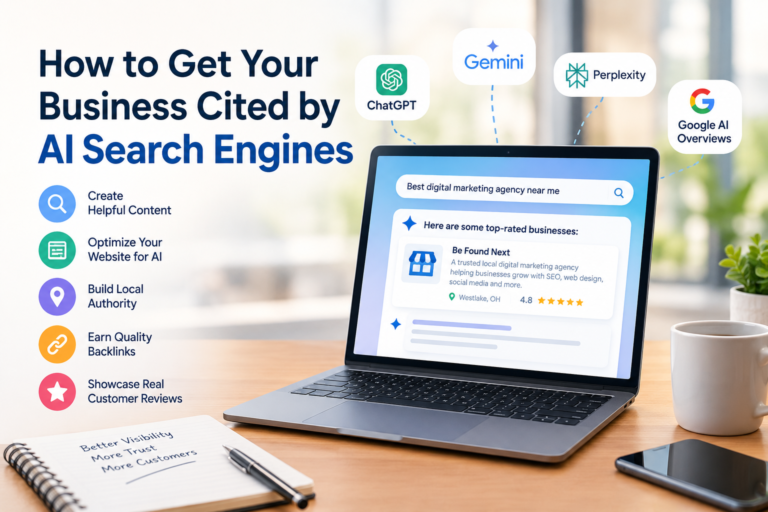
A customer types a question into ChatGPT, Perplexity, or Google’s AI Mode: who is the best web designer near me, or how much should a new website cost? The tool writes a short answer and names two or three businesses as its sources. If yours is one of them, a stranger just heard your name at the moment they were ready to hire. If it isn’t, they may never find you.
This is how a growing share of people now search. Instead of scanning ten blue links, they read a written answer and trust the names inside it. The good news is that earning those mentions does not depend on a secret trick. It depends on the same things that have always worked: clear answers, real expertise, and a website that loads andgo reads properly.
At Division Web Design, we build and fix websites for business owners who want to be found by both people and machines. This guide walks through the steps we use, in plain language. Whether you manage your own site or work with a team that offers professional SEO services, you will know what to ask for and what to fix first.
What It Means to Be Cited by an AI Search Engine
When an AI search tool builds an answer, it pulls facts from web pages and often lists the pages it used. Being cited means your page or your business name shows up in that list or inside the answer itself. Sometimes it is a clickable link. Sometimes it is only your name in a sentence. Either way, your business gets placed in front of someone who asked a direct question.
Where AI Answers Get Their Information
Google’s AI Overviews and AI Mode draw from pages Google has already crawled and indexed. ChatGPT search, Perplexity, and Microsoft Copilot rely on their own crawlers along with search partners. The practical takeaway is simple: if search engines cannot find, read, and understand your page, no AI tool will cite it. Normal search visibility is the entry ticket.
Why Citations Still Matter When Clicks Drop
Some searchers read the AI answer and never click anything. That is a real change, and it would be dishonest to pretend otherwise. But being named in the answer builds recognition, and visitors who do click after seeing your name tend to arrive already trusting you. A mention today can turn into a branded search or a booked call next week.
What Google’s 2026 Updates Mean for Your Content
Google has been busy this year. The March 2026 core update ran from March 27 to April 8, and a second core update ran from May 21 to June 2. An August spam update followed, running from August 18 to August 21, and at the time of writing Google has not announced a September core update. Google releases core updates several times a year, so another can arrive with little warning. Search Engine RoundtableSearch Engine Watch
The pattern behind these updates stays consistent. Google keeps rewarding pages made for people and keeps pushing down thin, mass-produced, or manipulative content. Google’s published guidance for site owners also says its AI features rely on the same quality signals as regular search, so there is no separate rulebook to learn.
One more point from Google’s own documentation on core updates: wait a full week after a rollout finishes before analyzing your data, and avoid changing pages that are already performing well. Panic edits after every ranking wobble usually do more harm than good. This is also the standard any provider of professional SEO services should hold itself to: fewer shortcuts, more useful pages, and calm decisions based on real data. Google
Step 1: Answer Real Questions Directly
Start With the Questions Your Customers Actually Ask
Open your inbox, your call notes, and your Google Search Console queries. The questions people ask you directly are the same ones they type into AI tools. Write them down word for word. “How long does a website redesign take?” and “Do I need a new site or just fixes?” make better page topics than any keyword list. Forums, review sites, and the “People also ask” box in Google add more ideas.
Put the Answer First
AI tools pick passages that answer a question cleanly. Use the question as a heading, then give the answer in the first two or three sentences. Add the detail, examples, and exceptions after that. A reader gets what they came for right away, and a machine gets a passage it can quote without rewriting.
Add Details Only You Would Know
Generic advice is everywhere, and AI tools already have plenty of it. What they cannot invent is your experience. Include real prices or price ranges, typical timelines, mistakes you see clients make, and results from past projects. A line like “most restaurant sites we rebuild lose orders because the menu is a PDF” carries more weight than a page of general tips. Google’s quality guidelines call this first-hand experience, and it is the hardest quality to fake.
Keep Each Page Focused
One page should answer one main question well. Pages that try to cover ten topics tend to answer none of them clearly. If a topic needs more depth, write a second page and link the two together. Clear structure helps readers move around and helps crawlers understand how your content connects.
Step 2: Show Real Experience and Credibility
Name the People Behind the Content
Anonymous pages are easy to ignore. Put an author name and a short bio on every article, with the person’s role and years of experience. Build a real About page that lists your team, your address, your service areas, and how long you have been in business. Search systems and readers both use these details to judge whether a source can be trusted.
Back Up Your Claims With Proof
If you say you are the best, show it. Publish case studies with numbers, add client testimonials with names, and link to your Google Business Profile reviews. Credit your sources when you use outside statistics. Trust is built from small, checkable facts, and AI tools tend to favor sources that make those facts easy to verify.
Step 3: Make Your Site Easy for Crawlers to Read
Even excellent content gets skipped when a crawler cannot reach it or a page takes too long to load. Run through this list on your own site:
- Crawler access: Check your robots.txt file. Make sure it does not block Googlebot, Bingbot, or search crawlers such as OAI-SearchBot and PerplexityBot unless you have a reason.
- Readable content: Keep important text in plain HTML. Answers hidden inside images, PDFs, or scripts that load late are easy for crawlers to miss.
- Speed: Aim for good Core Web Vitals scores on mobile, especially Largest Contentful Paint and Interaction to Next Paint.
- Mobile layout: Most local searches happen on phones, and Google indexes the mobile version of your site first.
- Clean structure: Use HTTPS, a working XML sitemap, and sensible URLs, and fix broken links and duplicate pages.
- Fresh dates: Show when a page was published and last updated, and revise older posts when facts change.
Most small business sites have at least two or three of these problems. They are also the quickest wins, which is why a technical review is usually the first task in any round of professional SEO services.
Step 4: Add Structured Data
Structured data is a block of code that labels what is on a page: this is a business, this is its address, this is a service, this is an article and its author. It does not replace good writing, but it removes guesswork for machines.
Start with Organization or LocalBusiness markup on your homepage, Service markup on service pages, and Article and Person markup on blog posts. Add FAQ markup only where real questions and answers appear on the page. One rule matters more than any other: the markup must match what visitors can see. Marking up reviews or claims that do not exist on the page is a fast way to get flagged. Test your pages with Google’s Rich Results Test and fix errors before publishing.
Step 5: Get Mentioned on Other Websites
AI tools do not rely on a single page. They compare what your site says about you with what other sources say. If your name, address, services, and description match across your Google Business Profile, Bing Places, local chamber of commerce, industry directories, and news mentions, you look like a real, established business. Inconsistencies make you look uncertain, so fix old listings with the wrong phone format, a previous address, or a different business name.
Then earn new mentions the honest way. Sponsor a local event, speak at a meetup, offer expert comments to reporters and local publications, write guest articles for industry sites, and ask happy clients to review you on the platforms your customers actually use. Skip bought links and bulk link swaps. Google’s spam systems exist to catch them, and the risk is not worth it.
How to Check Whether AI Tools Cite You
Set aside an hour each month. Write ten questions a customer might ask about your service and your area. Ask each one in ChatGPT, Perplexity, and Google AI Mode. Record whether your business appears, which competitors show up, and which pages get cited. Repeat the same list next month so you can compare.
Also check Search Console, where clicks from Google’s AI features are reported together with regular web search, and look in your analytics for visits from sources such as chatgpt.com or perplexity.ai. The numbers will be small at first. Watch the direction over a few months rather than daily swings.
Mistakes That Keep Businesses Out of AI Answers
The most common mistake is publishing unedited AI-written text. It reads like everything else on the internet, so there is no reason for a search system to pick it over the hundred similar pages already out there. Close behind are thin location pages that repeat the same paragraph with a different town name, keyword stuffing that makes sentences awkward, and answers buried inside tabs, images, or PDFs. Other problems come from outside the content itself: fake or purchased reviews, a robots.txt file that blocks crawlers by accident, and rewriting the whole site every time a rumor about an update spreads online. Slow, steady improvement beats constant reinvention.
When It Makes Sense to Get Help
Some of this you can do yourself in a few weekends: clean up your Google Business Profile, rewrite your five most important pages so they answer questions directly, and add author bios. Other parts, like crawl audits, structured data, and speed fixes, move faster with someone who does them every day.
When you compare providers, ask what they will change, how they measure results, and whether they write for people or for algorithms. Good professional SEO services should give you a clear list of fixes, a plan for new content, and plain reporting on leads and calls, not just rankings. If you want a second opinion on where your site stands right now, you can book a consultation with our team and we will go through it with you.
Your Next Step
Getting cited by AI search engines comes down to five habits: answer questions clearly, show real experience, keep your site technically clean, describe your business the same way everywhere, and measure what happens. None of them are shortcuts, and none go out of date with the next algorithm change.
Division Web Design builds websites and search strategies around these habits for local and growing businesses. If you want help putting professional SEO services to work for your business, get in touch through our website and tell us what you sell and who you serve. We will map out what to fix first.
