
A man gets rear-ended on Route 1 in Edison. His car is dented, his neck hurts, and he has no idea what to do next. Before he calls his insurance company, he types “attorney near me” into his phone. He taps one of the first few results, reads for a few seconds, and calls.
That moment decides which New Jersey firm gets a new client. It happens in Newark, Jersey City, Toms River, Cherry Hill, and every town in between. At Division Web Design, a law firm marketing agency in New Jersey, we have watched skilled attorneys lose those calls to firms with a better online presence. This guide covers how the search works and what to do about it.
What People Mean When They Search “Attorney Near Me”
The Search Is Urgent and Local
Nobody types “attorney near me” out of curiosity. The person has a pressing problem: an arrest, a crash, a landlord dispute, a custody hearing. They want a lawyer close enough to meet in person and familiar with the local courts. In New Jersey, that matters. A lawyer who regularly appears in the Union County courthouse in Elizabeth or the municipal courts of Hudson County knows the procedures and the people involved, and clients sense it.
Why the Top Three Listings Win
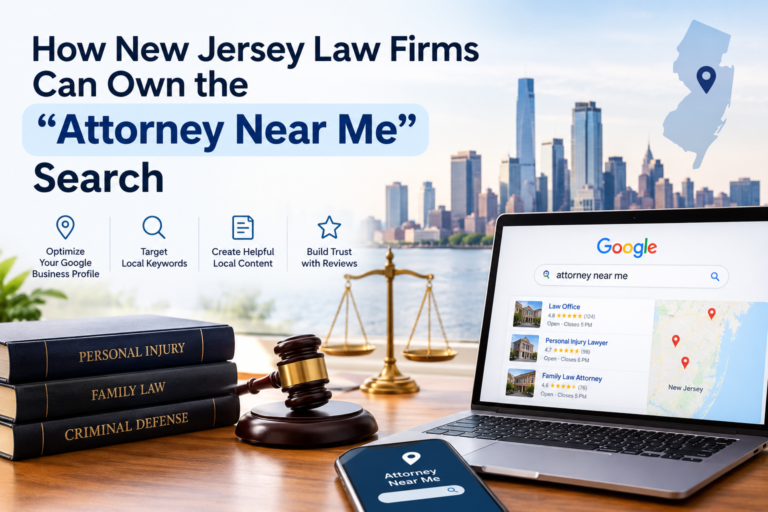
On a phone, Google’s map results often fill the first screen. The searcher sees three firms, star ratings, a call button, and a distance. Many people tap a button without ever opening a website. If your firm is missing from that group, or shows up with two reviews and a blurry photo, the call goes elsewhere.
How Google Decides Which Firms Appear
Relevance, Distance, and Prominence
Google says local rankings rest on three factors. Relevance is how well your profile matches the search. Distance is how far your office is from the searcher. Prominence is how well known your firm is, based on reviews, links, and mentions around the web. You cannot move your office, but you can improve the other two.
Helpful Content and Legal Topics
Below the map, Google lists regular website results. Its core updates now fold helpful content signals into the main ranking systems, so pages written for people rank and pages built to game search lose ground. Thin town pages that swap one city name for another, and generic text copied across many law firm sites, have both slipped. SEO for legal services works best when every page answers a real question and shows real experience behind the answer. Legal topics also get extra scrutiny because bad information can hurt people, so Google looks closely at who wrote a page and whether that person is qualified.
Step 1: Build a Google Business Profile That Earns Calls
Choose the Right Categories
Your Google Business Profile is the most important asset for the “near me” search. Pick a specific primary category, such as “Personal injury attorney” or “Divorce lawyer,” instead of the generic “Lawyer.” Add secondary categories only for services you actually handle, and write a short, honest description of each one.
Add Real Photos and Accurate Details
Post photos of your real office, the entrance, and your attorneys. Add parking notes, keep your hours current, and link to a booking page. A profile that looks active gets more taps than one that looks abandoned.
Collect Reviews the Right Way
Reviews are the strongest prominence signal you control. Ask satisfied clients at the end of a matter and send them a direct review link. Reply to every review with a short, general thank-you, and never include case details, since confirming someone was your client can raise confidentiality problems. Never pay for reviews or post fake ones. Google removes them and can suspend the whole profile.
Not sure where your profile stands? Book a free strategy call through the contact form at division.design. As a law firm marketing agency in New Jersey that works with local businesses every day, we will walk through your listing with you.
Step 2: Write Practice Area Pages That Answer Real Questions
Give Each Service Its Own Page
One “Practice Areas” page with twelve services in a paragraph each will not rank for any of them. Build a page for each core service: car accidents, DWI defense, divorce, real estate closings, workers’ compensation. Explain who the service is for, how the process works in New Jersey, how fees are structured, and what the first meeting looks like.
Add Local Detail Honestly
Mention the counties and towns you serve and tie them to real facts. A DWI page can explain how cases move through municipal court. A real estate page can describe New Jersey’s three-business-day attorney review period for home purchase contracts. Copying one page fifty times with a different town name does not work. Google reads it as filler, and so do people.
Answer the Questions Clients Actually Ask
Read your own intake notes and write down the questions that repeat. Do I need a lawyer after a minor accident? How long do I have to file an injury claim in New Jersey? What happens at a first court date? Answer them near the top of the page in plain language. SEO for legal services rewards this approach because it matches what people type, and it gives Google clear passages to pull into summaries. Have an attorney review every legal statement before it goes live.
Step 3: Show Who You Are and Why People Should Trust You
Google and clients both want proof that a qualified person stands behind the page. Give each attorney a full biography with a recent photo, bar admissions, years in practice, court experience, and memberships. Add a “reviewed by” line with the attorney’s name and the date on major articles. Be careful with results and comparisons. New Jersey’s attorney advertising rules (RPC 7.1 through 7.5) limit how you describe outcomes and compare yourself to other lawyers, so your ethics counsel should have the final word.
Step 4: Fix the Technical Basics
Good content on a slow site still loses. These items matter most for someone searching from a phone in a hospital waiting room:
- Pass Core Web Vitals on mobile so pages load fast and stay stable.
- Put a click-to-call button at the top of every page.
- Use HTTPS across the whole site.
- Keep your name, address, and phone number identical on your site, your profile, and every directory.
- Add LegalService or LocalBusiness structured data.
- Keep the contact form short: name, phone, and a brief description of the issue.
Technical work rarely wins a client alone, but weak technical work loses them. SEO for legal services builds on a site that loads quickly and makes it easy to reach a real person.
Step 5: Earn Local Mentions and Links
Prominence also comes from what trusted sites say about you. Start with the New Jersey State Bar Association, your county bar, local chambers of commerce, and nonprofits you support. Sponsor a youth team, run a free legal workshop at a library, or answer a reporter’s question about a local issue. Claim your profiles on Avvo, Justia, and Martindale with consistent details. Skip bulk link packages, since ten links from real local groups beat a thousand from sites nobody visits.
Step 6: Measure Calls, Not Just Rankings
A high ranking means nothing if the phone does not ring. Track calls from your profile, form submissions, booked consultations, and signed clients. Google Search Console shows which searches bring people to your site, and it helps to ask every new client how they found you. Check your rankings from several spots in your service area, since results change from street to street. You may rank well in Rahway but not in Elizabeth, which tells you where to focus next.
Read More:- PPC for Healthcare, Legal & Home Services: Industry-Specific Strategies That Work
Mistakes That Keep Firms Off the Map
Most firms are not doing anything wildly wrong. They copy one practice page across many towns, set up a profile once and never touch it again, or use stock photos of gavels instead of their own office. The biggest leak happens after the search. A person calls at 6 p.m., reaches voicemail, and dials the next firm on the list. SEO for legal services gets the phone to ring, but your intake process decides whether that call becomes a client. Set up after-hours coverage or a text-back system so no lead goes cold.
Choosing a Law Firm Marketing Agency in New Jersey
If you hire help, ask direct questions. Do they understand attorney advertising rules? Can they show results for other local service businesses? Will they report on calls and signed cases, not only clicks? Will you own your website, domain, and Google accounts if you part ways? Be wary of anyone who guarantees a number one ranking, since local search usually takes three to six months to show steady movement.
Division Web Design is a law firm marketing agency in New Jersey based in Rahway. We build websites, run SEO and paid search, and manage profiles for businesses across the state. We start with your practice: which cases you want more of, which towns you serve, and how intake works today.
The Bottom Line
Owning the “attorney near me” search comes from a complete, active Google Business Profile, practice pages written by people who know New Jersey law, clear proof of who your attorneys are, a fast site, and steady local reputation. Firms that do these things consistently land in the top three. Firms that skip them hand those calls to someone else.
If you want a second set of eyes on your search presence, work with a law firm marketing agency in New Jersey that understands both Google and the legal profession. Book a free strategy call through the contact form on any page at division.design. Our approach to SEO for legal services starts with your goals, not a template.
